
1,1,3,3-tetramethyldisiloxane (TMDSO)
SPECIALTY SILOXANE
TMDSO · CAS No. 3277‑26‑7
Purity ≥99.5% | Si-H ≥1.39% | Chloride ≤10 ppm
A reactive Si–H functional disiloxane for hydrosilylation and organosilicon intermediate synthesis.
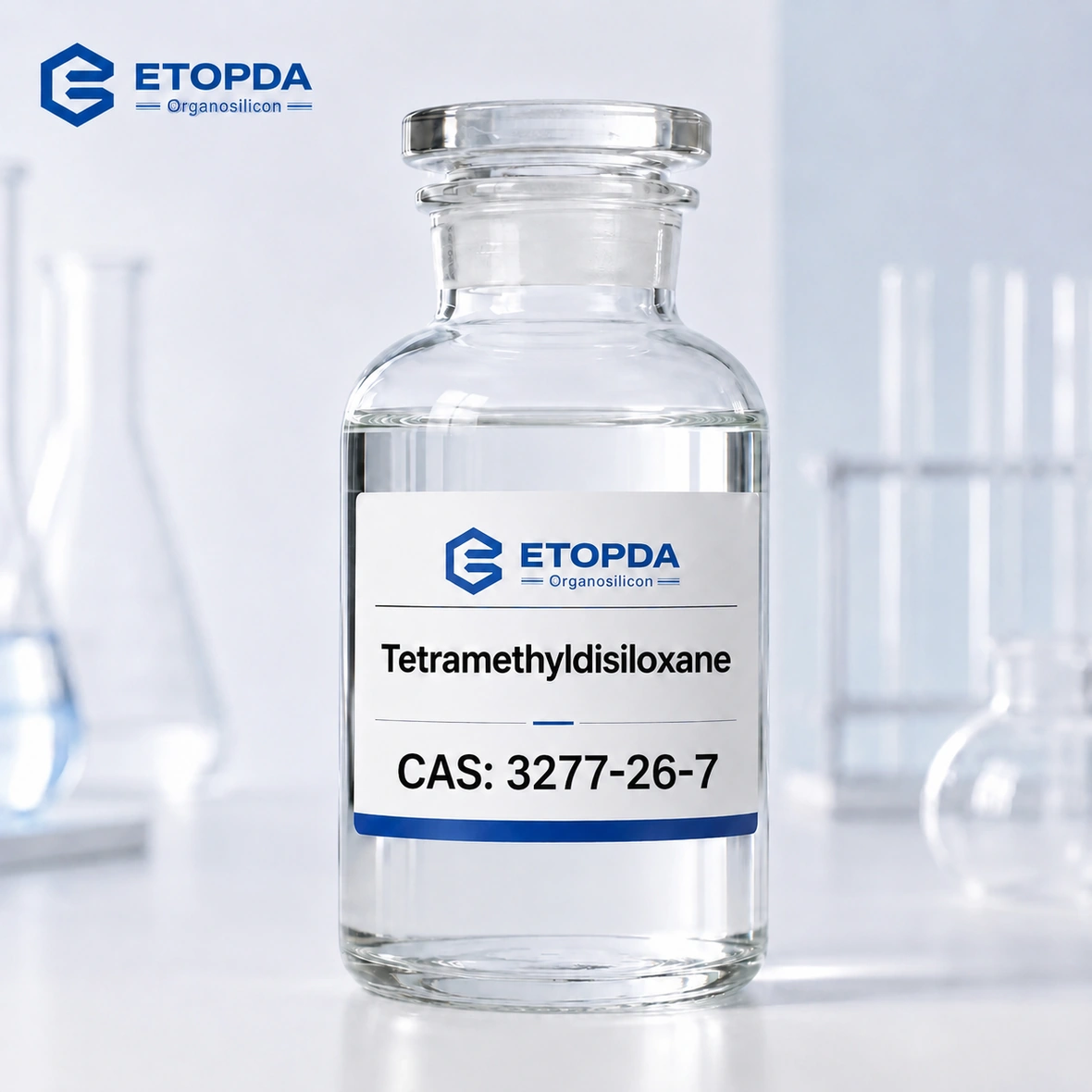
1,1,3,3-tetramethyldisiloxane (TMDSO)
1,1,3,3-tetramethyldisiloxane
CAS No.: 3277-26-7
typical properties
Einecs Number | 221-906-4 |
|---|---|
| Brand number | TMDSO / 1,1,3,3-Tetramethyldisiloxane |
| Quality indicators | Purity: ≥ 99.5% Si–H Content: ≥ 1.39% Chloride: ≤ 10 ppm Residual Acidity (as HCl): ≤ 10 ppm |
| Molecular formula | C₄H₁₄OSi₂ |
| Molecular weight | 134.33 g/mol |
| Appearance | Colorless, clear liquid |
| Boiling point | 70–71 °C |
| Density (20 °C) | 0.760–0.770 g/cm³ |
| Melting point | < −78 °C |
| Refractive index (20 °C) | 1.3669–1.371 |
| Packaging | 150 kg net per steel drum. Alternative packaging options are available upon request. |
| Storage | Store in the original unopened container in a cool, dry and well-ventilated place. Keep the container tightly closed and away from heat, sparks, open flames, direct sunlight, moisture and strong oxidizing agents. |
Target Industries
Hydrosilylation chemistry, silicone intermediates, silicone resin, specialty chemical synthesis
Product Information
Tetramethyldisiloxane is a reactive hydrogen-containing disiloxane with Si-H functionality. It is used as an intermediate for hydride-functional silicone fluids, silicone resins and specialty organosilicon compounds. Its Si-H groups enable hydrosilylation reactions and other functional transformations.
Typical Applications
- Intermediate for hydrogen-containing silicone oil, silicone resin and specialty siloxanes.
- Reactant for hydrosilylation to prepare functionalized siloxane derivatives.
- Chemical reagent and reducing agent in organic and organosilicon synthesis.
- Building block for silicone modifiers, coupling agents and advanced silicone materials.
Supply & Documentation
Available documentation may include COA, MSDS/SDS, TDS and customized export documents according to customer requirements. Packaging, purity and specification can be confirmed based on actual order grade.
Technical Resources
Why Si-H Content Matters When Evaluating TMDSO Quality
Learn why Si-H content should be evaluated together with purity, chloride, residual acidity and batch consistency when sourcing TMDSO.
How to Read a TMDSO COA: 4 Parameters Buyers Should Check Before Approving a Supplier
Learn how to read a TMDSO COA and evaluate purity, Si-H content, chloride, residual acidity and batch consistency before approving a supplier.